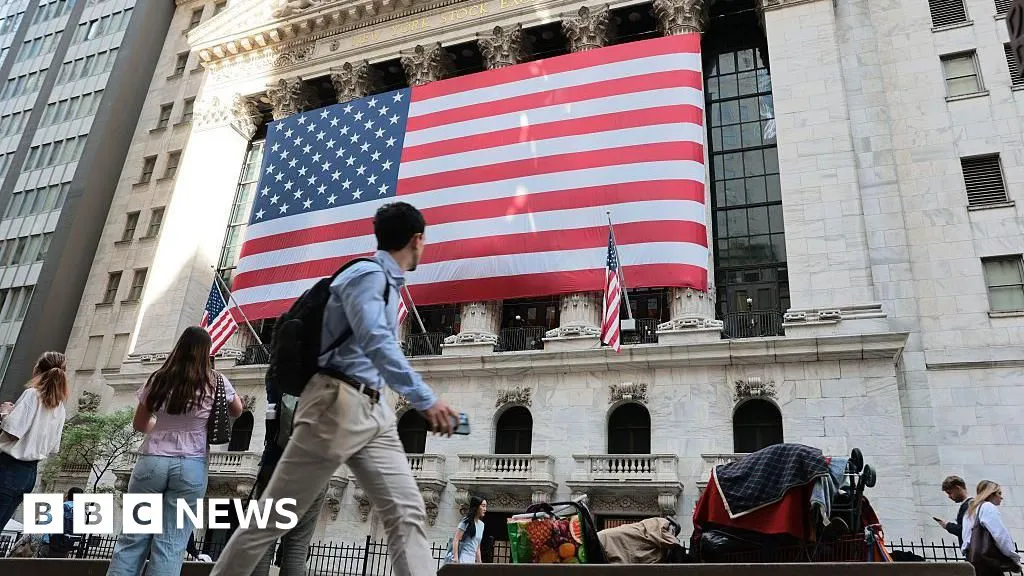
Despite facing significant global challenges, the US economy has consistently outperformed many of its international counterparts. This phenomenon raises an intriguing question: what factors contribute to the resilience of the American economy in the face of adversity?
Recent years have seen the developed world grappling with a series of economic shocks, from trade tariffs to geopolitical tensions. However, the US economy continues to demonstrate a remarkable ability to grow steadily, defying the odds. Inflationary pressures have surfaced at times, yet the dreaded combination of sluggish growth and rising prices has largely been avoided.
The Resilience of American Corporations
Joe Brusuelas, chief economist at RSM, interprets the trade wars as a testament to the underlying resilience of the American economy. He points out that rather than succumbing to economic pressures, US corporations ramped up their investments in response to the new tariff environment. "CapEx (capital expenditure) currently accounts for 13.9% of US GDP, a figure that would typically decline under prevailing economic shocks, but it remains robust," explains Brusuelas.
Productivity and Energy Independence: Key Factors
Another explanation for this economic resilience lies within productivity improvements. The broader US economy has maintained an annual growth rate of approximately 2%. At the same time, the American energy sector has fundamentally shifted due to the shale revolution. Increased oil and gas production has insulated the US from historical vulnerabilities associated with rising oil prices, often seen during global conflicts.
Brusuelas highlights that the fracking boom and advancements in alternative fuels have significantly decreased the oil industry's contribution to GDP over the past five decades. As a result, the US is less dependent on foreign energy supplies compared to Europe, which suffered from energy insecurity following the disruption of Russian gas exports after the Ukraine invasion.
Cultural Attitudes Towards Risk
This divergence in resilience between the US and Europe can also be attributed to differing cultural attitudes towards risk. Rebecca Christie, a senior fellow at the Brussels think tank Bruegel, emphasizes that Americans tend to be more solutions-oriented and open to short-term risks for long-term benefits. In contrast, Europeans often exhibit a risk-averse mindset, which can stymie innovation and adaptability.
Financial Structures and Flexibility
Moreover, the way businesses are financed in the US compared to Europe plays a pivotal role. American companies frequently turn to equity markets and venture capital for funding, allowing them greater flexibility. In contrast, European businesses often depend on bank loans, which can limit their adaptability in changing economic circumstances.
A Cautionary Note on Inequality
Even with these strengths, it's essential to acknowledge that the resilience of the US economy can mask deeper underlying issues, including high levels of income inequality. Christie notes that while the labor market has shown some strength, segments of the population still struggle significantly. "For those facing economic challenges, the current labor landscape offers limited new opportunities," she warns.
In conclusion, the apparent robustness of the American economy amid global turmoil can be attributed to a combination of corporate adaptability, energy independence, cultural attitudes towards risk, and financial flexibility. However, ongoing threats and disparities are reminders that economic resilience does not benefit all equally.
Source: BBC News - Business