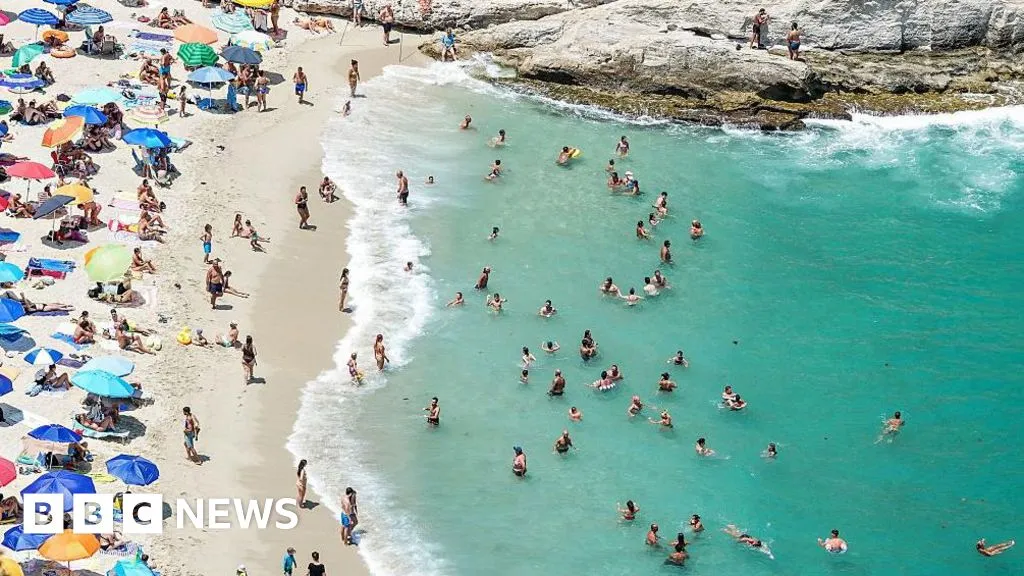
In a challenging season for travel, Tui, Europe's leading travel operator, has reported a significant 10% decline in summer holiday bookings from UK travelers. Concerns surrounding the ongoing conflict in Iran have made many would-be vacationers hesitant about committing to their travel plans.
Shifting Travel Preferences
In light of current global unrest, Tui has observed a noticeable shift in demand from Eastern Mediterranean destinations to more favorable locations in the West. Travelers appear to be opting for shorter booking windows, waiting until closer to their departure dates to secure their holidays.
Operational Adjustments Ahead
As a response to the changing landscape, Tui is reducing the number of seats purchased from airline partners by approximately 4-5% for the summer season, while maintaining its own flight program at current levels. Despite these reductions, Tui's Chief Executive, Sebastien Ebel, reassured stakeholders that he does not foresee immediate jet fuel shortages, despite growing concerns over the Strait of Hormuz — a critical corridor for oil and liquefied natural gas.
Fuel Prices and Customer Sentiment
The unrest has driven up jet fuel prices, prompting some airlines to hike ticket prices while others reduce capacity to attract cautious consumers. EU Energy Commissioner Dan Jorgensen recently stated that, despite the situation, the European Union does not anticipate serious jet fuel supply issues in the short run.
Financial Impact of Global Events
In its quarterly financial report, Tui disclosed a €40 million (£34.7 million) hit to profits stemming from the ongoing Middle Eastern conflict, alongside costs associated with repatriation and welfare. The company recorded an underlying loss before interest and tax of €188 million for the quarter, which, while still substantial, marks an improvement from last year.
Market Analysis and Consumer Trends
Market analysts are observing a trend where consumers are increasingly cautious with their spending on travel. According to Russ Mould, investment director at AJ Bell, the holiday and airline industry is eager to alleviate consumer jitters by providing clarity on fuel sourcing amid the geopolitical tensions.
Aarin Chiekrie, an equity analyst at Hargreaves Lansdown, noted that consumers aren’t fully abandoning their travel plans; they are simply delaying booking. This trend is supported by recent Barclays research that indicated a 7.5% dip in spending at travel agencies in April, alongside a 5.7% reduction in overall holiday-related expenditures compared to last year.
Industry Insight and Future Outlook
Dame Irene Hays, owner of UK travel agency Hays Travel, confirmed that the travel sector is grappling with uncertainties due to rising costs and geopolitical instability, although she remarked on the robust performance of both the cruise industry and tour holidays. Popular international destinations outside the U.S. and the Middle East, including Canada, Japan, Australia, South Africa, and Thailand, are drawing significant interest from travelers.
Hays emphasized that booking behaviors have shifted dramatically, with travelers now making reservations closer to their departure dates rather than months in advance, reflecting an adjustment in consumer behavior that suggests caution rather than a total retreat from travel plans.
To maximize choices and secure better deals, Hays advised travelers to book early when possible, underscoring the importance of clarity and reduced uncertainty in the market to boost consumer confidence.
For more information on these developments, visit the original article on the BBC.
Source: BBC News
Source: BBC News - Business