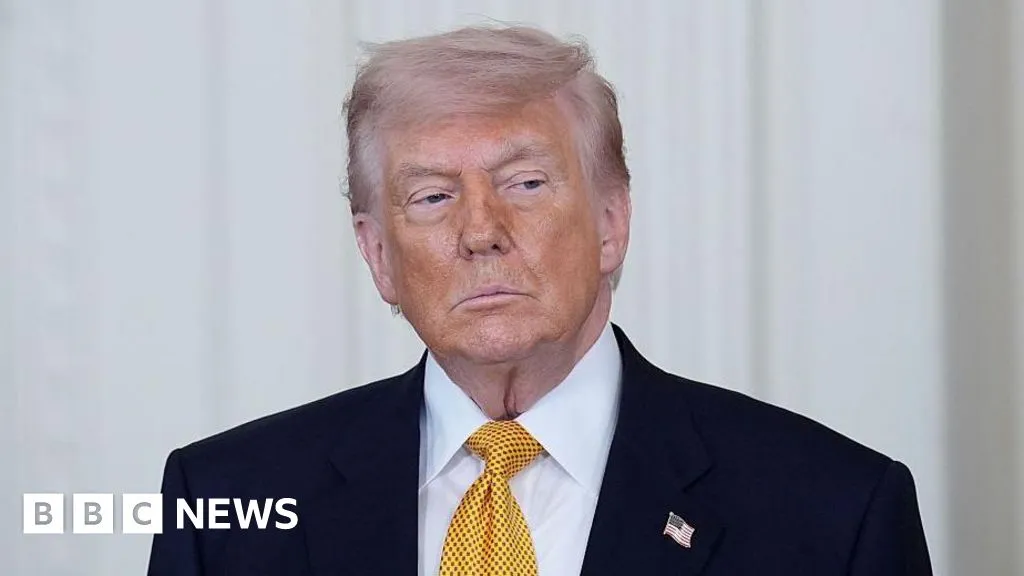
In a recent development, former President Donald Trump has criticized Iran's response to U.S. proposals aimed at ending ongoing hostilities, labeling it as "totally unacceptable." This stance comes amidst continuing tensions between the two nations and heightened military operations in the region.
Details of the Proposed Ceasefire Remain Concrete
While the specifics of both Iran's response and the U.S. proposal remain largely undisclosed, Iran's semi-official news outlet, Tasnim, reported that their proposal, relayed through Pakistani mediation, calls for an immediate cessation of hostilities, the dismantling of the U.S. naval blockade, and a commitment to avoid future attacks against Iran. Despite these overtures, the situation on the ground remains fraught, with sporadic exchanges of fire continuing despite a ceasefire that has been largely observed since it took effect last month.
Statements from Key Leaders
Earlier this week, Trump asserted that the conflict would conclude swiftly, yet Israeli Prime Minister Benjamin Netanyahu has countered this optimism, insisting that Iran's enriched uranium stockpile must be addressed prior to any resolution. In a CBS interview, Netanyahu emphasized the necessity of eliminating enrichment sites as a prerequisite for peace.
Commenting on the dialogue dynamics, Iranian President Masoud Pezeshkian stated, "We will never bow our heads before the enemy. If discussions arise, it does not equate to surrender or backing down." This sentiment underscores the complex atmosphere surrounding negotiations.
Trump's Remarks on Social Media
Trump took to Truth Social to express his discontent, stating, "I have just read the response from Iran's so-called 'Representatives.' I don’t like it - TOTALLY UNACCEPTABLE." This rejection indicates a challenging road ahead for any potential peace talks.
Conditions and Contingencies
U.S. media outlet Axios has revealed that the U.S. memorandum, spanning 14 points, includes demands such as halting Iran's nuclear enrichment, lifting economic sanctions, and ensuring free navigation through the strategically crucial Strait of Hormuz. However, much of this is contingent upon a formal agreement being established.
Iran's control over the Strait of Hormuz, a vital conduit for global oil and gas, has seen heightened scrutiny, particularly as military maneuvers by both American and Israeli forces continue in the region. The Iranian military has warned that vessels passing through this critical waterway should comply with their regulations or face repercussions.
International Responses and Concerns
In an effort to bolster security in the Gulf, the British Royal Navy announced that it will dispatch a warship to join international efforts safeguarding shipping in the Strait of Hormuz. Prime Minister Sir Keir Starmer has stated that this mission would commence only after hostilities cease. In contrast, Iran has issued warnings against any foreign military deployments in the strait, underscoring the volatility of the situation.
The backdrop of military operations in the region has fueled fears of increased oil prices and further instability, as tensions remain high amidst a complex web of geopolitical interests.
Stay updated as this situation unfolds, as the stakes continue to rise in one of the world's most turbulent hotspots.
Source: BBC News
Source: BBC News - World