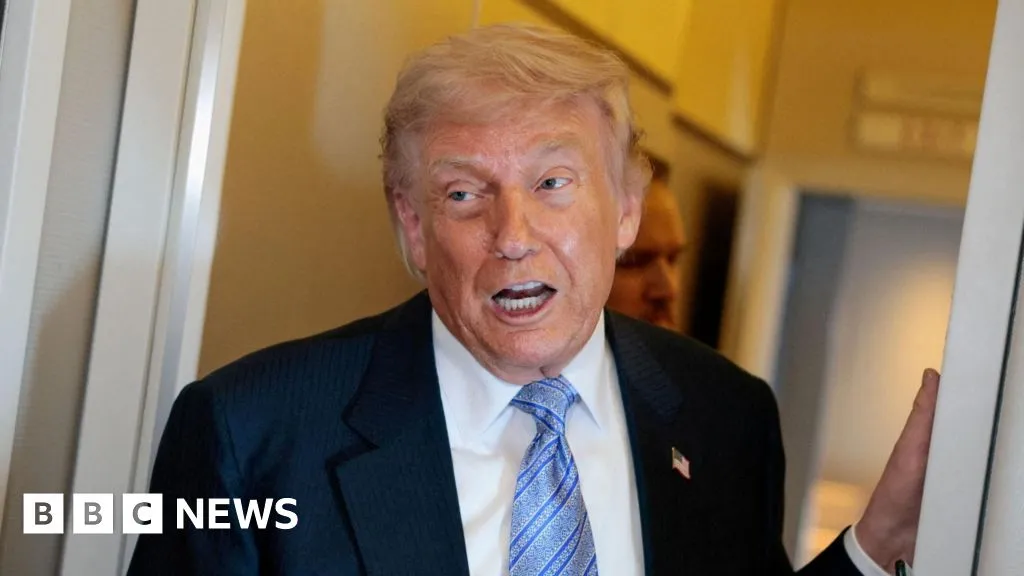
In a surprising turn of events, President Donald Trump announced that he has postponed a military strike on Iran that was scheduled for Tuesday. This decision comes at the request of leaders from Gulf states, including Saudi Arabia, Qatar, and the United Arab Emirates, amidst ongoing "serious negotiations."
In a post shared on Truth Social, Trump expressed optimism, revealing that a favorable deal with Iran might be imminent. He stressed that any agreement must guarantee that Iran does not obtain nuclear weapons, stating emphatically, "NO NUCLEAR WEAPONS FOR IRAN!" However, he also made it clear that the U.S. remains poised for military action if negotiations fail, warning that America would be prepared to launch a "full, large-scale assault" at a moment's notice.
Strategic Concerns Amidst Regional Tensions
The possible attack on Iran has been deeply concerning for Gulf Arab states, who fear the repercussions of further U.S. military actions. Iranian military forces have already demonstrated capabilities that could escalate tensions in the region, with their arsenal of drones and missiles posing a direct threat to neighboring countries and critical infrastructure.
Trump described the ongoing discussions as a "very positive development" but cautioned that the past has shown that such negotiations can falter. "We thought we were getting close to making a deal before, and it fell apart. This time feels a bit different," he added, hinting at the potential for a new agreement that avoids military conflict.
As the geopolitical landscape shifts, recent surveys indicate growing discontent among U.S. voters regarding Trump's handling of the situation with Iran. A New York Times/Siena poll revealed that 64% of Americans consider the decision to engage in war with Iran as misguided, while only 37% approved of Trump’s overall performance as president. Such sentiments could pose significant challenges for the Republican party in the upcoming midterm elections.
Continuing Hostilities and Diplomatic Efforts
Despite a ceasefire established in April aimed at facilitating discussions, sporadic exchanges of fire have persisted. Iran has maintained its control over the Strait of Hormuz, a vital chokepoint for global oil supplies, significantly influencing international oil prices.
In response to Trump's recent comments, Iranian Supreme Leader Mojtaba Khamenei issued a warning of potential retaliation against any foreign aggressions, underscoring the volatility of the situation. Meanwhile, diplomatic communications between the U.S. and Iran are reportedly being brokered by Pakistani intermediaries, though Iran has expressed dissatisfaction with the lack of substantial concessions from the U.S. side.
As both sides navigate this complex dispute, the clock appears to be ticking toward a critical juncture in U.S.-Iran relations, and both Trump and Iranian officials are keenly aware of the high stakes involved.
For further updates, stay tuned as the situation develops.
Source: BBC News
Source: BBC News - World