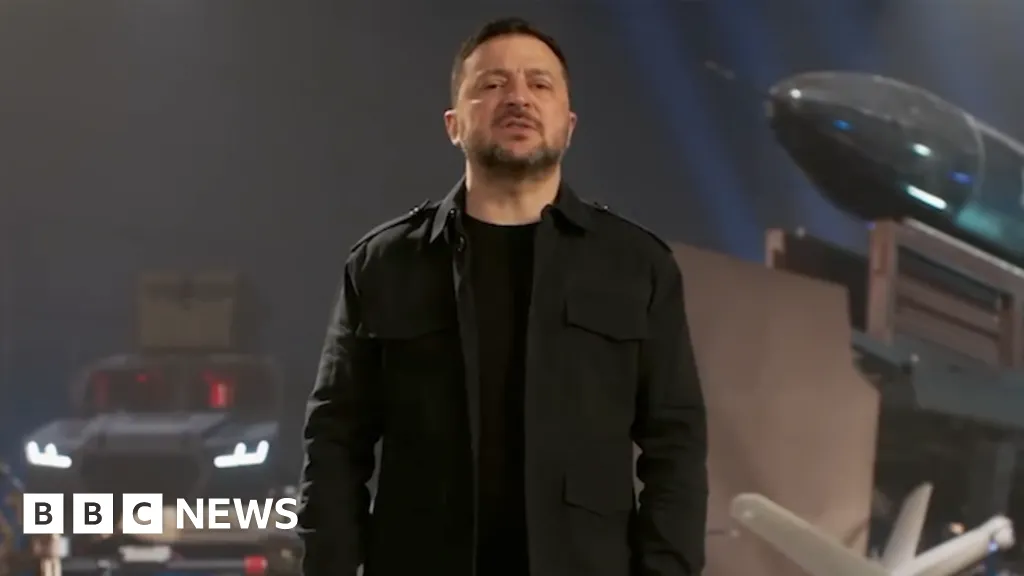
In a world where modern warfare is rapidly evolving, Ukraine's President Volodymyr Zelensky has unveiled a groundbreaking assertion: significant territorial advancements have been achieved using only robots and drones. This claim raises pivotal questions about the future of unmanned combat and its implications for global military strategies.
The Emergence of UFORCE
A Ukrainian-British military startup, UFORCE, has positioned itself at the forefront of this technological revolution. During a recent visit to their discreet London facility, designed to minimize risk from potential threats, I learned about their involvement in what Zelensky described as an unprecedented operation.
According to President Zelensky, this operation marks a historic moment in warfare, showcasing the capabilities of Ukraine's newly developed robotic assets. While there are limited public details about the operation, representatives from UFORCE confirmed their systems are actively deployed in combat scenarios.
Unprecedented Combat Missions
Rhiannon Padley, UFORCE's UK Director of Strategic Partnerships, emphasized the scale of their contribution, noting that they have successfully executed over 150,000 combat missions since the onset of the full-scale Russian invasion in 2022. These figures underscore the significance of robotic weapon systems in contemporary warfare.
The rising trend of robots engaging in conflict is now a lucrative sector, with UFORCE achieving “unicorn” status—valued over $1 billion (£730 million). The potential for robotic systems to outnumber human combatants on the battlefield may soon become a reality, further necessitating the evolution of military infrastructure.
The Shift Towards Autonomous Warfare
Both Ukrainian and Russian forces have harnessed drones extensively throughout the conflict, with advancements in military technology accelerating at an unprecedented pace. Analysts predict that this trend will continue, shaping the nature of wars to come.
Melanie Sisson, a senior fellow at the Brookings Institution, pointed out that Ukraine's innovative strategies in defense highlight a crucial shift within national security paradigms. “Ukraine has become a significant teacher in the future of national defense,” she stated, emphasizing how necessity fosters technological innovation.
Challenges and Ethical Considerations
As robotic warfare becomes more prevalent, companies like UFORCE and their American counterpart Anduril are leading the charge, introducing AI into their systems. While many drones remain remotely operated, the integration of autonomous tech is advancing. These advancements, however, invite serious ethical debates regarding accountability and human rights.
Patrick Wilcken of Amnesty International cautioned against the risks of delegating critical decisions to machines, underscoring the need for a human presence in the decision-making process.
A Glimpse into the Future
The emergence of AI-controlled warfare systems raises both excitement and concern among military analysts and human rights advocates alike. As Jacob Parakilas from RAND Europe points out, the use of drones in combat is likely just the beginning; a future where robots directly engage in warfare could soon be upon us.
As the conflict in Ukraine continues to unfold, it serves as a powerful case study in the evolution of warfare, potentially transforming the landscape of military engagement across the globe.
For more insights on this topic, visit the .
Source: BBC News - Technology