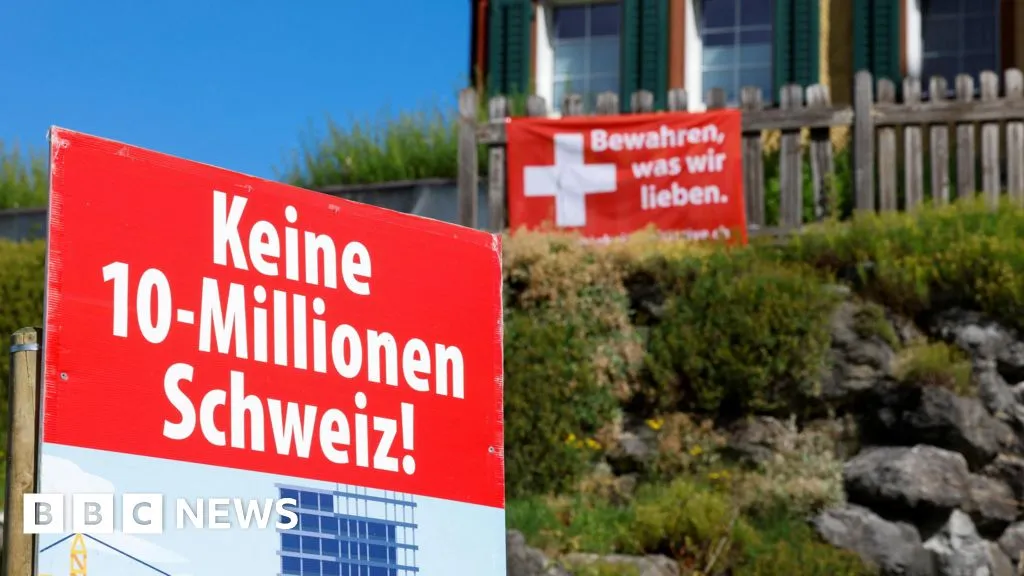
In a pivotal referendum held recently, nearly 55% of Swiss voters cast their ballots against a proposal to cap the country’s population at 10 million. The results, with a voter turnout of 60%, highlight the nation's complex views on migration and population growth.
The Proposal and Its Context
The controversial proposal originated from the right-wing Swiss People’s Party, a political group known for its strong anti-immigration stance. Supporters argued that limiting population growth was essential for reducing strain on public services and the environment. However, during the public discourse, concerns about potential impacts on employment and essential services were raised.
Switzerland has seen significant population growth in recent years, increasing from 7.3 million in 2002 to approximately 9.1 million today, with around 27% of residents being non-Swiss citizens. Detractors of the population cap warned that curtailing migration could jeopardize the country’s free movement agreement with the European Union, critical for economic stability.
Government and Business Leaders Respond
Justice Minister Beat Jans expressed relief at the decision, interpreting it as a testament to Switzerland's openness and stability. The Swiss government and business community widely opposed the initiative, suggesting that the rejection reaffirms Switzerland's desire to maintain strong ties with Europe.
European Commission President Ursula von der Leyen, while remaining neutral during the campaign, celebrated the outcome, emphasizing the deep connections between Switzerland and the EU.
Divided Opinions and Future Concerns
Despite the successful rejection of the proposal, pressing issues persist. Many Swiss citizens continue to express worries over issues like rising rents, overcrowded public transport, and increasing healthcare costs. Marcel Dettling, president of the Swiss People’s Party, noted that this vote demonstrates a public demand for solutions, insisting the matter of population control has not been resolved.
In the lead-up to the referendum, opinions sharply divided urban and rural constituencies. Urban voters leaned predominantly against the cap, recognizing the necessity of immigrant workers in sectors like healthcare and tourism. In contrast, rural areas showed more support for the proposal, reflecting diverse perspectives on migration and its impacts.
The Final Verdict
As Swiss democracy relies heavily on direct voting, outcomes like this one exemplify public sentiment. The Swiss People’s Party will likely need to reconsider their approach. Voters seem increasingly skeptical of linking immigration to social issues, indicating a desire for comprehensive solutions instead of scapegoating.
The rejection of the population cap not only marks a significant decision for the nation's future but also highlights a complex landscape of opinions surrounding immigration policy in Switzerland.
For detailed coverage, visit the original source.
Source: BBC News - World