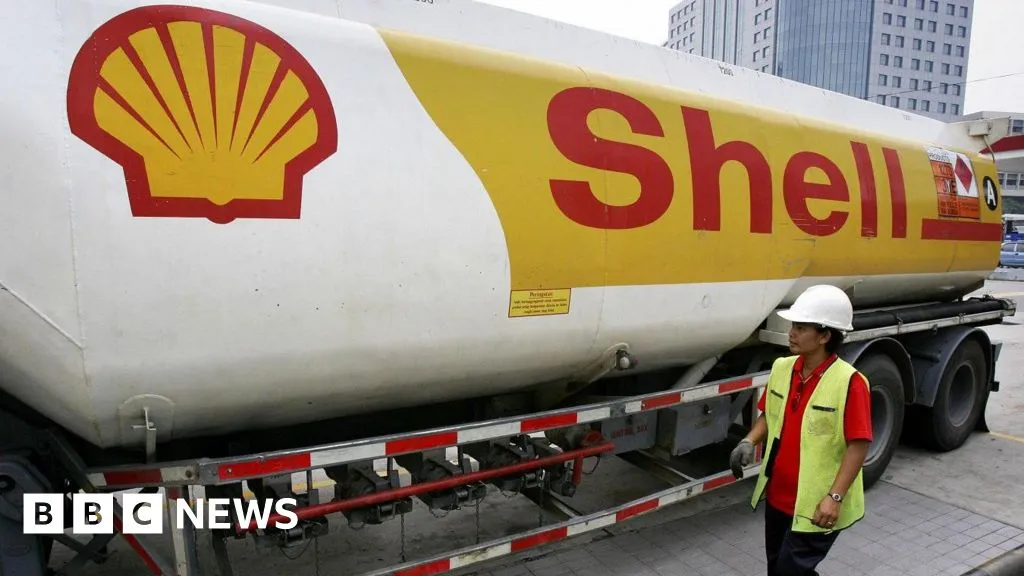
Shell has emerged as a key player reaping rewards from the recent upheaval in oil prices, reporting a remarkable profit increase of nearly 25%. The energy giant's earnings hit $6.92 billion (£5.1 billion) for the first quarter of the year, surpassing analyst expectations and rising from $5.58 billion during the same period last year.
Impact of the Iran War on Oil Markets
The surge in profits comes in the wake of the ongoing war between the U.S. and Israel against Iran, which has significantly affected the crucial Strait of Hormuz. This vital passageway is responsible for transporting about 20% of the world's oil and liquefied natural gas (LNG). With the strait effectively closed, oil prices have surged, resulting in a volatile market.
Last week, competitors in the oil sector, including BP, reported even more dramatic profit increases, with BP's earnings more than doubling in the same timeframe. Meanwhile, Norway's Equinor also showcased impressive results, claiming profits of $9.77 billion, marking its highest quarterly earnings in three years.
Shell's Strategy Amid Global Disruptions
Wael Sawan, Shell's CEO, commented on the company's performance, stating, "Shell delivered strong results enabled by our relentless focus on operational performance in a quarter marked by unprecedented disruption in global energy markets." He emphasized the priority of ensuring the safety of employees while collaborating with governments and customers to meet energy demands.
Trading Gains and Refining Margins
Shell's trading division has particularly benefited from the fluctuations in oil prices, with margins widening due to the volatility between buying and selling prices. Brent crude, the benchmark for oil prices, was valued around $73 a barrel before the conflict escalated but has seen dramatic peaks exceeding $120. Currently, Brent hovers around $101 a barrel.
Additionally, higher margins from the company’s refining operations, which convert crude oil to finished products like gasoline and jet fuel, further contributed to these impressive gains. However, it’s important to note that Shell's oil and gas production declined by 4% compared to the previous quarter, primarily due to the ongoing conflict.
Acquisition and Future Outlook
Earlier this week, Shell announced its acquisition of Canadian shale producer ARC Resources for $16.4 billion, with Sawan stating that this move would "deliver value for decades to come." The long-term strategy appears focused not only on capitalizing on current market conditions but solidifying Shell’s future position in the energy sector.
Calls for Windfall Tax on Energy Giants
The spike in profits has drawn criticism from environmentalists. Danny Gross, a climate campaigner with Friends of the Earth, stated, "Once again, fossil fuel giants are pocketing monstrous profits while drivers face high fuel costs and households brace for increased energy bills. The solution is clear: bolster the windfall tax on these unjust profits and shift to renewable energy sources."
In the UK, energy firms are subject to a windfall tax known as the Energy Profits Levy, introduced in response to soaring profits following Russia's invasion of Ukraine. While the tax is set to last until March 2030, it only applies to profits generated from oil and gas extraction within the UK. Most profits made by companies like Shell occur outside the UK.
Currently, households in the UK enjoy some protection from increased costs due to a price cap on gas and electricity, which is projected to rise by approximately £200 in July as the wholesale prices react to the Iran conflict.
As energy prices remain in flux, the implications of these profits are profound and raise significant questions about the future of energy dependence and regulatory measures.
Source: BBC News
Source: BBC News - Business