In a worrying escalation of military actions, the United States and Iran have exchanged strikes across the Middle East for the second day running, casting doubt on the fragile ceasefire established in April. US Central Command (Centcom) reported executing a series of 'self-defense strikes' against key Iranian military installations, shortly after President Trump vowed to respond decisively to Iranian aggression.
Iran's Retaliatory Measures
In response, Iran targeted American military assets stationed in Bahrain, Kuwait, and Jordan, leading to reported damage in the capital of Bahrain during an overnight assault. Iranian officials asserted that these strikes challenged the validity of the two-month ceasefire, branding it 'practically meaningless'.
Casualties and Damage Reported
The Iranian Revolutionary Guard Corps (IRGC) claimed it fired ballistic missiles aimed at a US command center in Jordan, stating that their strikes had incapacitated several US fighter jets and facilities at the Muwaffaq Salti Airbase. Yet, Jordanian media reported the interception of 20 missiles, indicating no human casualties.
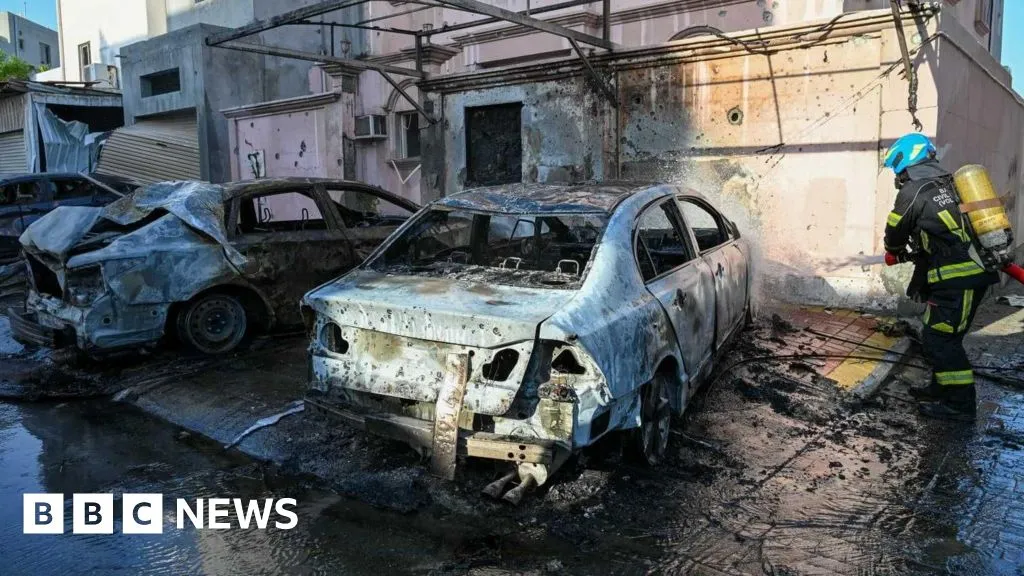
An incident in Bahrain resulted in activated air raid sirens due to falling shrapnel from intercepted Iranian drones, damaging homes and vehicles. Fortunately, only minor injuries were reported, with an 11-year-old girl receiving treatment.
Kuwait also reported intercepting 'hostile aerial targets' and temporarily closed its airspace before reopening it shortly after the attacks. Meanwhile, explosions were noted around Tehran and its southern ports, with Iranian media indicating strikes against oil tankers in the strategically significant Strait of Hormuz, although these reports require further validation.
Oil Prices Surge Amid Crisis
The escalating tensions have significantly impacted global markets, with Brent crude oil prices jumping to approximately $95 per barrel following reports of the skirmishes and potential threats to shipping routes. Centcom, however, reassured that commercial shipping continues to operate in the Strait of Hormuz despite the tumult.
Warnings from US Officials
Prior to the latest round of strikes, President Trump emphasized on social media that the US would continue to apply pressure on Iran until a deal is struck, warning of further strikes if necessary. He criticized Iranian leaders for delaying negotiations, while US Defence Secretary Pete Hegseth asserted the necessity for decisive actions against Iranian provocations.
Diplomatic Efforts at a Standstill
Despite the recent ceasefire, military exchanges have persisted. Previous attempts to engage in negotiations remain stalled, and tensions are escalating, demonstrated by the recent downing of an American helicopter, attributed to Iranian actions.
UN Secretary General António Guterres expressed concern regarding the deepening crisis in the Middle East, calling attention to the urgent need for dialogue and peace.
As this situation continues to develop, it highlights the complexities and volatility of Middle Eastern geopolitics and the potential for further conflict.
Source: BBC News - World