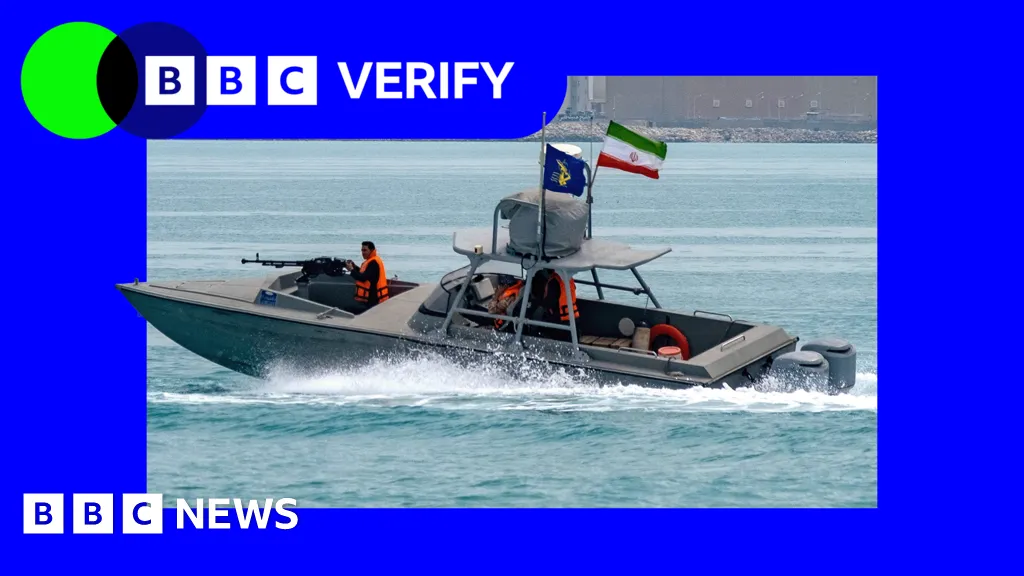
In a significant move, Iran has announced a substantial expansion of its military oversight claims in the critical Strait of Hormuz, a vital trade artery for global oil transport. The newly established Persian Gulf Strait Authority has released a map illustrating Iran's assertion of control over an area exceeding 22,000 square kilometers (approximately 8,800 square miles), encroaching into territorial waters of both Oman and the United Arab Emirates (UAE).
Reactions to Iran's Claims
The UAE has swiftly dismissed Iran's claims, labeling them as “fragments of dreams.” Anwar Gargash, the UAE's diplomatic adviser, stated, “Iran is attempting to solidify a narrative following its military setbacks, but any effort to control the Strait of Hormuz or infringe upon the UAE’s maritime sovereignty is baseless.”
Legal Context and International Response
According to the United Nations Convention on the Law of the Sea, vessels are guaranteed safe passage through another nation’s waters. However, Iran has yet to ratify this essential international law. Concurrently, the United States and its regional allies continue to reject Iran's claims, with US officials advising ships not to comply with Iran's regulations.
Recent Military Activities
In the midst of these escalating tensions, Iranian state media linked to the Islamic Revolutionary Guard Corps (IRGC) recently broadcast footage purportedly showing a “punishment” strike on a vessel in the Strait. Analysis indicates that the footage corresponds to an incident involving the Liberian-flagged tanker Barakah, which was struck by unidentified projectiles in early May.
US Actions in the Region
Simultaneously, US military forces have ramped up their operational presence in the area. On Wednesday, US Central Command announced the boarding of an Iran-bound oil tanker suspected of breaching the American blockade on Iranian ports. This operation involved US Marines deploying from a helicopter onto the vessel, identified as Celestial Sea, which has previously been sanctioned by the US due to its ties to Iran.
Ongoing Diplomatic Tensions
As these developments unfold, US military engagements have led to the redirection of 94 commercial vessels and the disabling of four ships since the blockade's initiation on April 13. Recent statements from US President Donald Trump indicate a cautious approach to military action against Iran, as he holds ongoing peace negotiations involving Gulf state leaders.
Regional Diplomacy Efforts
Meanwhile, reports have surfaced regarding the visit of Pakistan's military chief, Asim Munir, to Tehran, aimed at mediating between Iran and the United States. The Iranian foreign ministry indicates a willingness to review new proposals from the US to end hostilities.
With the situation rapidly evolving, global observers are closely monitoring these strategic developments in the Strait of Hormuz.
Source: BBC News - World