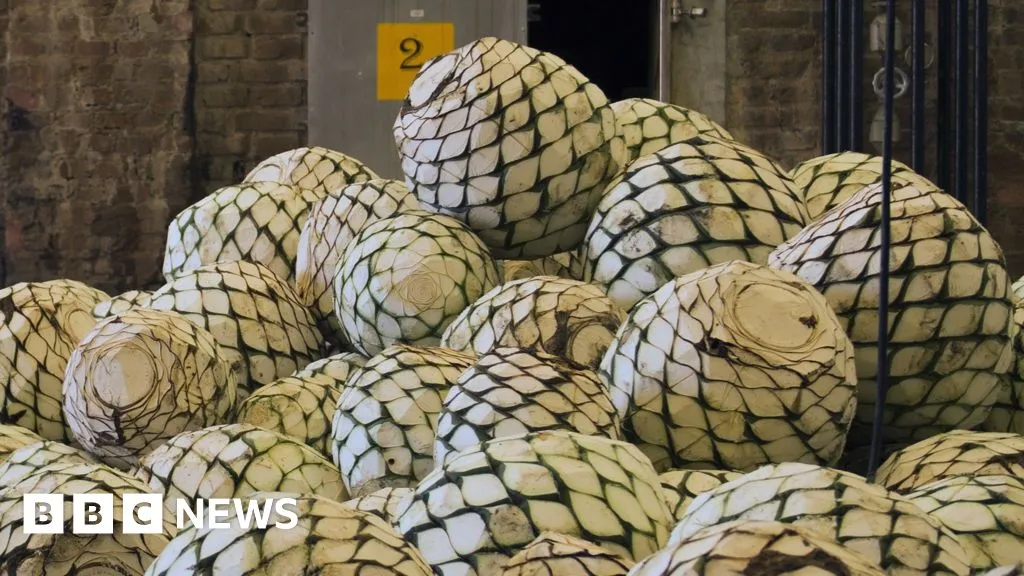
In India, the spiky agave plant, once regarded as a mere weed, is now driving a burgeoning spirits industry that has captured the attention of distillers and drink enthusiasts alike. Known as 'blue gold,' agave is rapidly gaining a foothold within the country's evolving beverage landscape.
A Transformation On Indian Soil
Masapalli Venkatesh, a farmer from Kandukur, sits on a 10-acre plot on the Deccan Plateau, traditionally filled with crops like tomatoes and peanuts. In 2010, he was approached by traders who were interested in an unusual crop—agave americana. This robust cactus, once seen only as fencing to protect against wild animals, is now viewed by local farmers as a potential goldmine.
“What we once deemed a stubborn weed is becoming a source of additional income,” Venkatesh explains. “The demand for this cactus has made it a lucrative venture for many in our community.”
Harvesting the Sweet Potential
India’s agave plants grow wild, with no commercial cultivation like that seen in Mexico’s Jalisco state. Farmers like Venkatesh collaborate to consolidate their yields, ensuring a steady supply to meet the demands of distillers.
“Combining our efforts lets us provide a high-volume supply that distilleries actively seek,” Venkatesh states proudly.
Harvesting agave is a precise skill, centering on the heart of the plant—the piña. It resembles a large pineapple and its sugar content makes it ideal for spirit production. Skilled workers must delicately chop away the sharp leaves to access the precious piña.
The Timing Must Be Perfect
Timing is everything when it comes to harvesting agave. Once the plant begins to bloom, it rapidly channels its sugar reserves into the stalk. If not harvested promptly, the piña becomes useless. “Gatherers must pinpoint the exact window just before blooming,” says Rakshay Dhariwal, founder of Maya Pistola Agavepura. “It's a meticulous process, but crucial for maintaining the sugar content.”
The Urgency of Production
After being harvested, the piñas must be quickly transported to processing facilities, typically within a 24-hour window. Any delays can lead to the sugars decaying and losing their distinct flavor profile required for premium spirits.
“Each transport is a race against time. If we exceed the 24-hour mark, the sugar begins to ferment unpredictably,” warns Dhariwal.
Rising Demand for Agave Spirits
The thirst for agave spirits is surging in India, with market growth reported at an impressive 31%. As consumers begin to embrace this unique category of beverages, producers are experimenting with local agave varieties to carve out a niche.
“Only a few years ago, there was very little awareness around tequila in India,” explains Vikram Achanta, co-founder of 30 Best Bars India. “Today, people are eager to try new spirits, and agave is becoming a part of that exploration.”
The Future of Agave in India
Industry pioneers like Desmond Nazareth of Agave India are leading the charge. After years of research and trial, Nazareth launched India’s first homegrown agave spirit in 2011. “It took nearly 12 years to develop our craft distillery, but now we’re ready for the growing market,” he reflects.
As the spirits landscape transforms, India’s agave industry is on the brink of making its mark, promising innovative products and a unique identity that could resonate well beyond its borders.
Source: BBC News
Source: BBC News - Technology