The declining costs of robotic technology have made it more feasible for companies like BMW to invest in humanoid robots. Bill Ray, a distinguished VP analyst at Gartner, highlighted that the shift in thinking comes from a desire to integrate these robots into pre-existing workflows, rather than restructuring entire production lines.
A Closer Look at Aeon
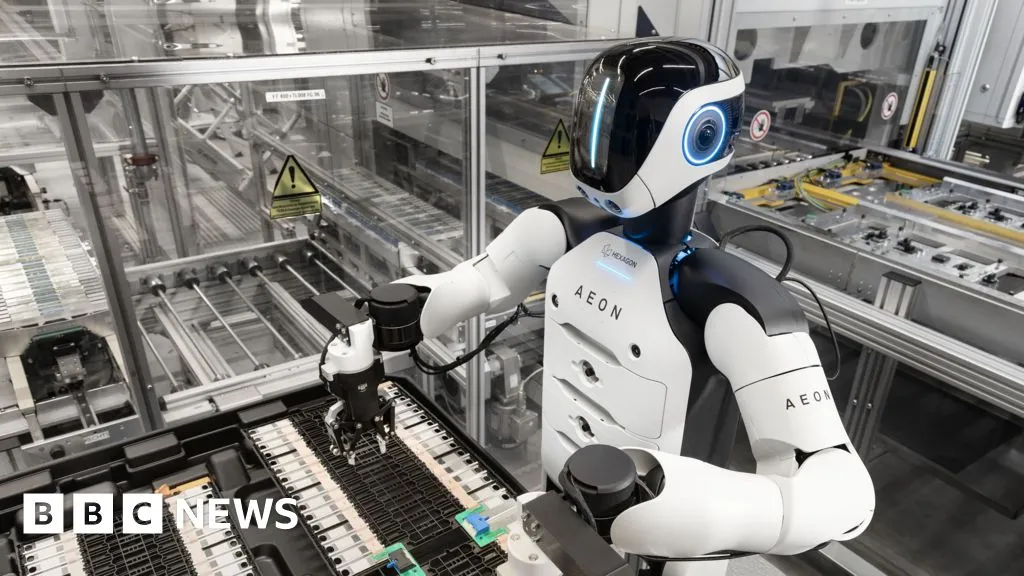
Aeon stands at a height of 1.65 meters (5 feet 5 inches) and weighs around 60 kilograms (9 stone 6 pounds). With a maximum speed of 2.4 meters per second, Aeon can carry weights of 15 kilograms for short durations and 8 kilograms continuously. Equipped with 21 sensors, including cameras and force/torque sensors, Aeon is ready to tackle various manufacturing challenges.
Cutting-Edge Training Techniques
The training methods utilized for Aeon are a blend of teleoperation and advanced simulation. By employing a digital twin of the factory with the help of Nvidia software, Aeon learns through reinforcement learning—tackling assigned tasks and identifying optimal execution methods.
The Future of Automation: Imitation Learning
With advancements in artificial intelligence, the pace at which robots can be trained is accelerating. Arnaud Robert, president of robotics at Hexagon, emphasizes the potential of imitation learning to drastically reduce training durations from months to mere days.
Roles and Responsibilities of Humanoid Robots
At BMW, Aeon’s primary roles will include supplying parts to manufacturing tools and executing pick-and-place tasks for battery assembly. While these robots are designed to be multifunctional, like human operators, they will not frequently change tasks, ensuring consistency in the production process.
A Solution to Labor Shortages
Nikolaides advocates for humanoid robots as a solution to both repetitive and physically demanding tasks, particularly in light of upcoming labor shortages. Drawing historical parallels, he suggests that the automation of the 1970s, initially feared to cause job losses, ultimately resulted in job creation—an optimistic outlook for today's automation developments.
Other Industry Players Exploring Humanoid Robotics
BMW is not alone in exploring the potential of humanoid robots. Other automotive giants, such as Toyota and Hyundai, are also stepping into this innovative space. Toyota plans to incorporate Agility Robotics' Digit robots, while Hyundai aims to leverage Boston Dynamics' Atlas robots for various industrial tasks.
The integration of humanoid robots signifies a pivotal moment in the automotive sector, broadening the landscape for efficient car production and redefining workforce dynamics.
Source: BBC News - Technology