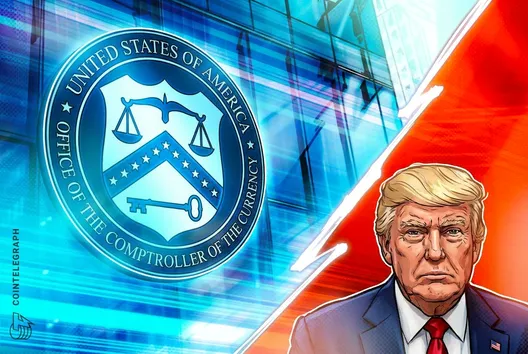
The ongoing debate over cryptocurrency regulation took center stage during a recent House Financial Service Committee hearing, where U.S. Comptroller of the Currency, Jonathan Gould, faced tough questions from New York Representative Gregory Meeks. The discussion centered on the application for a national trust charter submitted by World Liberty Financial, a crypto firm with deep ties to the Trump family.
Pressure Points: A Clash of Political Interests
During the session, Rep. Meeks questioned Gould about potential political influences affecting the charter application process, accusing him of acting as a "fixer" for Donald Trump. The verbal sparring underscored the contentious nature of cryptocurrency regulation and its intersection with high-profile political figures.
As Gould explained, the only substantial political pressure he had felt about the trust charter application came from Democratic lawmakers, particularly Meeks himself. "Your attempts to continue to pressure me are the only political pressure I’ve felt from anyone other than your Senate colleagues," he stated, emphasizing the unusual nature of the scrutiny.
World Liberty Financial Under the Microscope
The application from World Liberty Financial, which was submitted in January, has raised eyebrows due to its connections with foreign governments and the controversial Binance exchange. Critics, including Meeks, have argued that the company could improperly benefit from its ties to Trump.
Meeks articulated his concerns clearly, stating, "The company actively lines the pockets of the president’s family," and urged Gould to hold World Liberty to the same regulatory standards as its competitors. He implied that Gould’s approval of the application would signal a failure to uphold public interest, instead suggesting a prioritization of the Trump family’s financial interests.
Precedent in Crypto Regulatory Approvals
It's important to note that the OCC, under Gould's leadership, has already consented to national trust charter applications from several crypto firms, including prominent names like Coinbase and Ripple. This history raises questions about whether the OCC's track record allows for objective consideration of World Liberty Financial’s application.
Senator Elizabeth Warren is also keeping a watchful eye, having previously criticized the OCC for granting approvals to what she calls "seemingly ineligible companies," which could potentially violate federal banking laws.
Looking Ahead: The CLARITY Act and Market Regulation
As the cryptocurrency landscape continues to evolve, all eyes are on the Senate, which is expected to vote soon on the comprehensive digital asset market structure bill known as the CLARITY Act. Treasury Secretary Scott Bessent has signaled that the Trump administration is pushing for timely passage this summer, with hopes for a favorable outcome before August.
The debate over cryptocurrency regulation is far from settled, and the outcome of World Liberty Financial's charter application may have broader implications for how crypto firms are treated in the financial system. As the situation unfolds, stakeholders and market participants will be keenly observing the actions taken by regulatory bodies.
Source: Cointelegraph