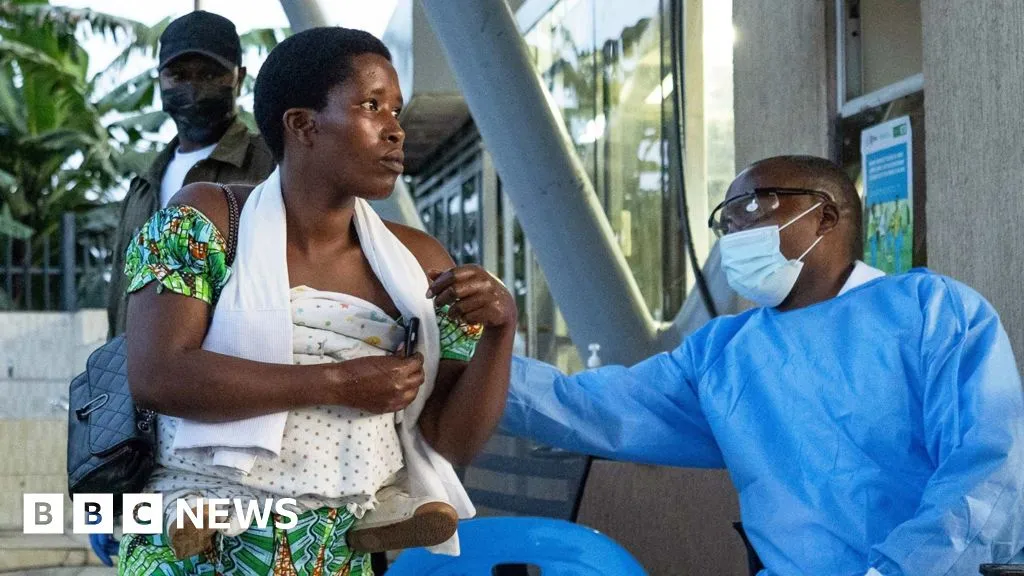
As the Ebola outbreak unfolds in the Democratic Republic of Congo (DRC), fears are escalating among local populations that the situation may be deteriorating more rapidly than initially anticipated. Dr. Anne Ancia of the World Health Organization (WHO) recently shared alarming updates, indicating that the virus might be dispersing at an alarming rate.
The Reality on the Ground
In the northeastern Ituri province, the epicenter of the outbreak, residents are grappling with terrifying realities. A local individual, who identified himself as Bigboy, expressed the dire situation saying, "Ebola has tortured us." He described how infected individuals are succumbing to the virus at an alarming pace, with current estimates suggesting that over 513 cases are now suspected across the country, alongside 131 confirmed fatalities. There is also a report of one death in neighboring Uganda.
Underreported Cases Raise Concerns
Recent modeling from the MRC Centre for Global Infectious Disease Analysis in London has brought to light that the number of actual cases could be significantly higher, with estimates potentially exceeding 1,000 cases. This modeling highlights a troubling trend: the current outbreak could be far larger than what has been recorded, leaving health officials and community leaders scrambling for effective responses.
Local Response and Precautions
In response to the burgeoning crisis, community members have begun taking precautions, such as increased handwashing with clean water. However, many express a desperate need for additional protective supplies, such as face masks. Local resident Alfred Giza stated, "We are aware of the threat, but we do not know how to protect ourselves effectively." The Red Cross has issued warnings that the outbreak could escalate rapidly if cases go unrecognized and health services become overwhelmed.
Government and WHO Actions
On Tuesday, DRC President Félix Tshisekedi called for calm among citizens while urging vigilance. The WHO’s chief, Tedros Adhanom Ghebreyesus, declared the outbreak an international emergency last week, emphasizing his concerns regarding its scale and speed. The outbreak is suspected to have been developing for weeks prior to its detection on April 24.
Current Challenges and Future Approach
With the particularly aggressive strain of the Ebola virus circulating in this outbreak, there are currently no available vaccines. The WHO is reviewing potential treatments to combat the virus. Ancia remarked that the Ituri region is a "very unsecured area with frequent population movements," complicating efforts to contain and investigate the outbreak.
As the disease has spread to the South Kivu province and the city of Goma, heightened border screenings and health preparedness are being instituted across several neighboring African nations. Rwanda has opted to close its borders with the DRC, while Uganda is advising citizens to avoid physical greetings like handshakes and hugs.
International Evacuations Underway
An American doctor, identified as Peter Stafford, who contracted Ebola while working in the DRC, is being evacuated for treatment in Germany. The U.S. Centers for Disease Control and Prevention (CDC) is also orchestrating the evacuation of at least six additional Americans believed to have been exposed.
Conclusion
In a race against time, the WHO, alongside other organizations, is collaborating with local authorities to implement preventive measures, urging community members to report any symptoms immediately. As the global community watches closely, the situation in DR Congo underscores the urgent need for vigilance and support.
For further information, visit BBC News.
Source: BBC News - Health